


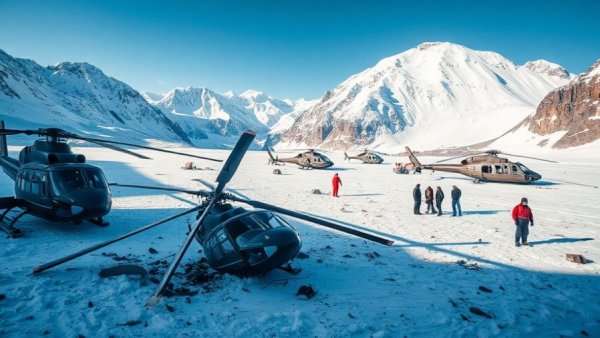
The Tragedy at Everest: Two Helicopters Collide in Rescue Operation
In a heart-wrenching incident just below Mount Everest base camp, two helicopters collided during a rescue operation in the Pheriche area of Solukhumbu District, Nepal. It was 8:12 a.m. on a relatively calm Tuesday when the fateful accident occurred. According to the Civil Aviation Authority of Nepal (CAAN), one of the helicopters involved was operated by Air Dynasty, while the other belonged to Fishtail Air. Tragically, this accident resulted in the death of 47-year-old Vasanth Kumar Balaramudu from Chennai, India, who was aboard the Fishtail helicopter.
The other occupant of the Fishtail Air helicopter, New Zealand national Shailesh Kisan Patel, sustained injuries along with at least one pilot engaged in the rescue operation. Fortunately, the injured parties were quickly airlifted to a hospital in Kathmandu for medical attention. As investigations commence by CAAN, officials are determining what corrective actions, if any, are warranted following this tragic occurrence.
Helicopters: Lifelines Among the Peaks
Helicopters are invaluable assets for the Everest region, where treks and climbs can lead to unforeseen health struggles due to altitude sickness and exhaustion. With no roads to aid in transportation, these flying machines serve as crucial evacuators for trekkers and guides navigating an ever-changing and sometimes hostile atmosphere. The important role of helicopters was underscored during this unfortunate incident, as they were operating amidst the challenges posed by heavy snowfall—conditions that had significantly restricted trekking routes until they improved just days before the collision.
In such remote areas, these helicopters not only assist in rescuing individuals who may suffer from altitude-related illnesses but also play a vital role in transporting supplies to remote camps. Without helicopters, access to medical help or even food and water would be severely limited for those exploring the majestic but perilous landscape.
A Glimpse into the Current Travel Environment
The region's aerial operations, while essential, have not been without their risks. This incident follows another recent travel-related crisis in Nepal, where catastrophic flooding left many American tourists stranded earlier this year. The flooding, which resulted from a glacier collapse, caused flash floods and landslides that claimed over 1,300 lives and left thousands missing, with rescue efforts continuing in the shadows of ongoing disaster concerns.
For those considering travel to Nepal or similar rugged destinations, these events raise awareness about the challenges one might face. Understanding the local geography and climate helps travelers prepare adequately for their excursions. It is crucial for adventure seekers, especially seniors looking for unique experiences, to be well-informed about safety measures related to altitude and potential natural disasters.
Ensuring Safer Air Travel
The gravity of air travel safety in mountainous regions like Everest cannot be overstated. While helicopters are a lifeline, incidents like this raise questions about operational protocols and safety measures that need to take precedence. In light of this collision, aviation authorities must address potential gaps in their rescue operations. It brings to mind the necessity of robust training for pilots, stringent maintenance procedures for aircraft, and the need for enhanced communication systems between rescue units.
Effective pilot training is critical, particularly in challenging weather conditions. Improving situational awareness and risk assessment capabilities among pilots could lead to better decision-making during emergencies. Additionally, adopting advanced technology can enhance navigation and communication, ensuring safer flights amid difficult terrain.
Engaging with Nature: The Dual-Edged Sword of Adventure
For Louisiana residents, many of whom appreciate the great outdoors and adventure travel, understanding both the allure and the risks of destinations like Nepal can influence travel plans and the choice of activities. Nature beckons with its breathtaking views and thrilling experiences, yet it accompanies inherent dangers—something worth considering for our own escapades.
The tragic incident at Everest not only highlights the importance of air travel in remote areas but also the share of responsibility we each bear when undertaking adventures. Preparing properly, respecting the natural environment, and adhering to safety guidelines are imperative steps travelers can take to enhance their experience while mitigating risks.
Honoring Lives Lost in Pursuit of Adventure
As news of this accident resonates, it reminds us that behind every voyage or inch of progress in the mountains, there are real stories and lives at stake. The grieving friends and family of Vasanth Kumar Balaramudu, in particular, feel the profound sting of loss. As they process their sorrow, we can reflect on the importance of compassion and understanding when discussing risks associated with travel.
Every adventure carries a certain degree of uncertainty, and it is essential to honor those who have lost their lives pursuing their dreams in the face of nature's unpredictability. The conversation around adventure travel may encourage us to advocate for improved safety measures and preparedness, ensuring future generations can explore these majestic landscapes with minimal risk.
Take Action: Stay Informed on Travel Safety
In an age where nature offers both respite and risk, it's essential to stay informed, prioritize safety, and consider broader implications on travel practices. For those considering future travel, particularly to destinations with known hazards, engage in thorough research, stay updated on local conditions, and never hesitate to seek advice from experienced travelers and local authorities.
As we navigate the complex tapestry of adventure, let us uplift each other by sharing experiences, insights, and support, enriching our communities both locally and globally. Additionally, as we acknowledge significant events such as the recent collision, it serves as a reminder to remain vigilant and informed travelers, ensuring safety always comes first while relishing the beauty that nature has to offer.




Write A Comment